
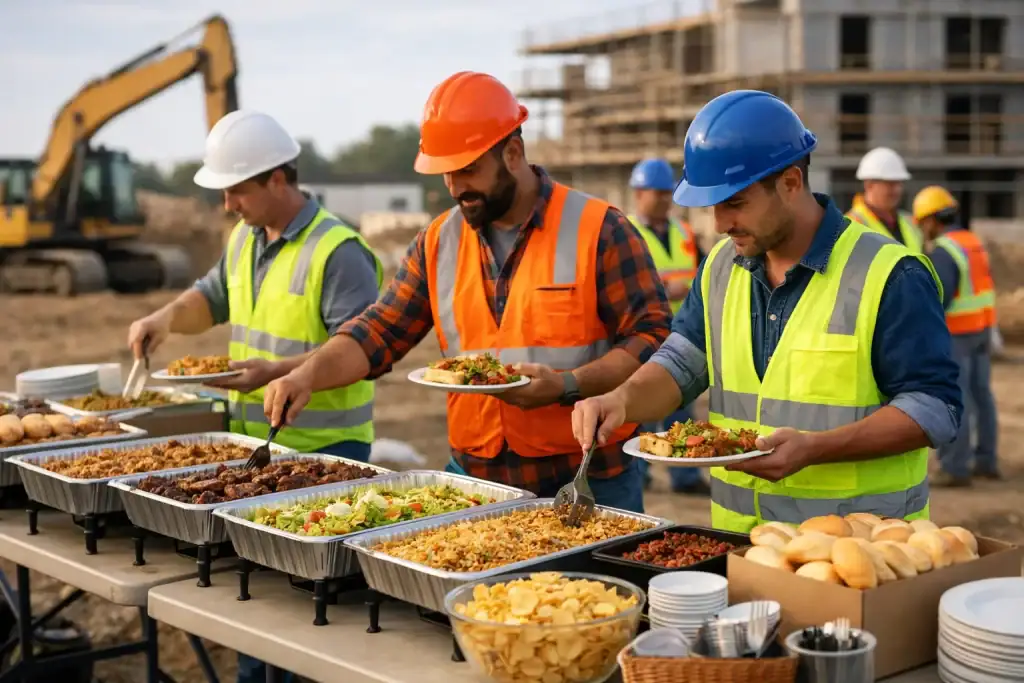
A 30-minute lunch break can turn into a production problem fast when 150 workers have to drive off site, wait in line, and get back through the gate. This large crew dining guide is built for the people responsible for keeping that from happening: superintendents, project managers, field-office teams, and owners managing active construction work.
Feeding a large crew is not corporate catering with more trays. It is a site operation with a fixed service window, changing headcounts, access rules, safety expectations, and no room for a late truck. When the plan is right, meals keep workers on site, breaks stay controlled, and the field team has one less thing to think about. When it is wrong, cold food, traffic at the gate, and long lines cost time nobody planned to lose.
Start With the Work Schedule, Not the Menu
The first question is not whether the crew wants barbecue or breakfast burritos. It is when each trade can actually eat without disrupting critical work.
On a large project, crews rarely break at the same time by accident. Concrete, steel, electrical, mechanical, and finishing teams may have different start times, work zones, and supervision. A single lunch drop for everyone can create a long line, crowd a small break area, and stretch a 30-minute break into 45 minutes. That is not a food issue. It is a scheduling issue.
Build the meal plan around the actual production schedule. Confirm shift start times, planned break windows, whether breaks are staggered, and which work fronts need separate service. Early breakfast service may be the best fit for a crew mobilizing before sunrise. A hot lunch program may make more sense for workers who otherwise leave a remote industrial site. For a safety meeting, individually packaged meals may move faster than a buffet line.
The right format depends on the job. There is no prize for serving the fanciest meal. The objective is simple: get the right amount of food to the right people, at the right location, inside the break window.
Large Crew Dining Guide: Get the Headcount Right
A crew count written down on Monday can be wrong by Wednesday. Trade partners ramp up, shifts overlap, a weather delay changes the sequence, or a concrete pour brings in extra hands. Ordering too little creates frustration quickly. Ordering far too much creates waste and makes the program look uncontrolled.
Use a working headcount, not a guess. The field office should identify the expected number of workers, then account for regular visitors, delivery personnel who may be included, and scheduled subcontractor additions. On a major site, a small attendance buffer is often practical, but it should be deliberate rather than automatic.
Before each service, the catering partner needs a clear answer to five operational questions:
- How many people are expected, including new trades and shift overlap?
- What is the exact serving window, and are breaks staggered?
- Where can the driver enter, park, unload, and exit?
- Who is the on-site contact with authority to make a quick call?
- What site rules apply to PPE, badges, escorts, security screening, and setup?
Those details are not administrative busywork. They are what prevent a delivery from sitting at a locked gate while the crew’s break clock is running.
For recurring programs, update counts on a predictable cadence. A weekly confirmation works well on stable projects. Fast-moving sites may need daily adjustments. The key is to establish one accountable contact and a cutoff process the whole team understands.
Choose a Service Format That Protects the Break Window
Buffet-style service works well when there is enough space, enough staff to manage the line, and a concentrated meal period. It gives crews a hot, familiar meal and can be a strong option for milestone lunches, appreciation events, or consistent midday service.
But buffet service is not always the fastest answer. If workers are scattered across a large footprint, if access is limited, or if breaks are tight, boxed lunches can provide better control. Workers grab a labeled meal and get back to their area without waiting for a serving line. For a safety meeting, boxed meals also reduce handling and make distribution easier in a field office, tent, or designated gathering area.
Breakfast deserves the same planning. A crew that reports at 5:30 a.m. does not benefit from a caterer that operates on office hours. Hot breakfast sandwiches, burritos, protein-forward options, coffee, and cold drinks need to arrive when the shift begins, not when a conventional restaurant is ready to deliver.
For crews above a few hundred workers, a single service point may not be enough. Consider multiple serving stations, staggered pickup waves, or separate drops by work zone. The goal is to keep the line moving. Every minute a worker spends waiting for food is a minute the project is paying for without getting production back.
Plan for Jobsite Access Like It Is Part of the Meal
On an active site, delivery logistics can be harder than cooking the food. A catering truck may need a gate pass, a designated route, a safety orientation, PPE, a specific arrival window, or an escort. Roads can change, laydown yards move, and a gate that worked last month may be closed today.
A jobsite-ready catering plan addresses those conditions before service day. Provide the delivery team with the correct gate, a reliable contact number, instructions for checking in, and the setup location. If access changes, communicate it early. Do not leave a driver trying to interpret a site map while the field team is in a coordination meeting.
Setup matters too. A good location is close enough for workers to reach without crossing active equipment paths, but far enough from the work face to avoid congestion and safety conflicts. It needs room for tables, hot holding equipment, waste collection, and an orderly line. On some projects, the best answer is a covered break tent. On others, it is a field office staging area or several distributed pickup points.
This is where conventional event caterers often miss the mark. A jobsite does not pause because lunch is arriving. The food provider has to fit the operation, follow the rules, and work within the window.
Serve Food Crews Will Actually Eat
Crew meals need to be filling, dependable, and easy to eat during a short break. Workers do not need tiny portions or complicated presentation. They need hot food that travels well, holds its quality, and provides enough substance to get through physical work.
That does not mean every meal has to be heavy. A practical rotation includes hearty proteins, vegetables, starches, sandwiches, wraps, and options that meet common dietary needs. The exact mix depends on climate, shift timing, crew makeup, and the work being performed. Outdoor summer work may call for more cold drinks and lighter lunch choices. Cold-weather projects often see strong demand for hot breakfasts, soups, and substantial meals.
Ask early about vegetarian meals, allergies, religious dietary requirements, and any owner or workforce expectations. These are manageable when they are planned. They become problems when a worker is handed the only meal that does not fit their needs.
For multi-day or long-term programs, menu rotation is worth the effort. Crews notice when the same meal repeats too often. Variety supports morale, but it must not come at the expense of reliability. Familiar, well-executed food beats an ambitious menu that arrives late or does not hold up on site.
Make One Person Accountable From Quote to Cleanup
The strongest meal programs do not create another coordination chain for the superintendent. They establish a single point of contact who knows the site, the schedule, the order volume, and the next service date.
That accountability should show up in clear quotes, straightforward invoices, confirmed delivery windows, and quick responses when conditions change. If a schedule shifts, the catering provider should be ready to coordinate the adjustment, not force the field team to start over with a new person every time.
National Jobsite Catering is built around that jobsite-first approach, supporting one-time safety meetings, milestone meals, and recurring programs for crews ranging from small trade teams to large-scale workforces. The standard is not hospitality theater. It is on-time food, controlled service, and fewer disruptions to the work.
Measure Whether the Program Is Working
A meal program should earn its place in the project plan. Watch what happens during and after the break: Are workers back on time? Are lines moving? Is food remaining untouched? Are certain work zones being missed? Is the headcount consistently off?
A quick check-in with foremen is usually more useful than a formal survey. They will tell you if portions are short, pickup is too far away, or the timing conflicts with the way their crew works. Use that feedback to adjust service points, menu mix, order quantities, or delivery timing before a small frustration becomes a recurring complaint.
The best result is often quiet. The crew gets fed, the gate stays clear, the break ends on time, and no one in the field office is chasing a missing lunch order. On a jobsite with a full schedule and plenty of moving parts, that is what rock-solid service looks like.